
千羽 · Senba for iPhone
A thousand folds.One wish.
Senba is a journal that hands things back. Write down what you are working toward, then answer one small prompt a day: eight seconds of voice, one photo, one line. Each answer is a fold.
Weeks later it returns one to you, set against the goal you wrote down, as evidence you are further along than you feel.
Everything stays on your device · No account
Fold. Keep. Return.
Senba is built on one loop. It is small enough to do on a bad day and it compounds into something you cannot argue with.
01
Fold
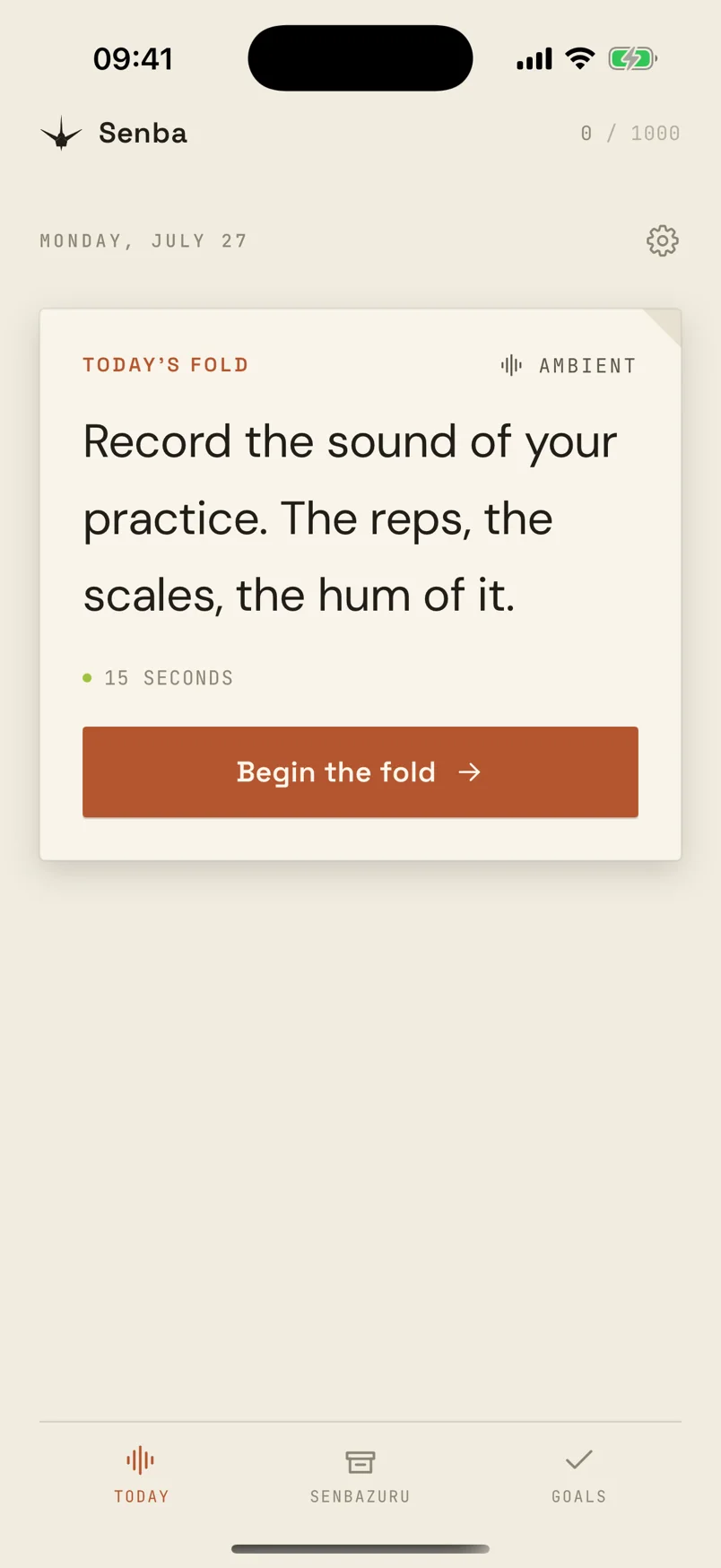
A prompt arrives with the form already chosen. Eight seconds of voice. One photo. One line. Fifteen seconds of the room you are sitting in.
02
Keep
Everything you capture is filed quietly against six threads: what you did, what you want, what scares you, how you are, what moved you, what you are getting better at.
03
Return
Weeks later, Senba hands a piece back. Your own voice, from before you knew how it turned out. Not a quote from a stranger. Yours.
The app picks the form.
You just answer.
The failure mode of every journal is a blank page and a standing order. Senba removes both. A constraint is easier to act on than an open field, and more fun.
Voice
Hold the dial, say it out loud, let go. The keystone: hearing your own past voice lands harder than reading it.
8 seconds · one takePhoto
One frame of whatever the prompt is pointing at. No filters, no second try.
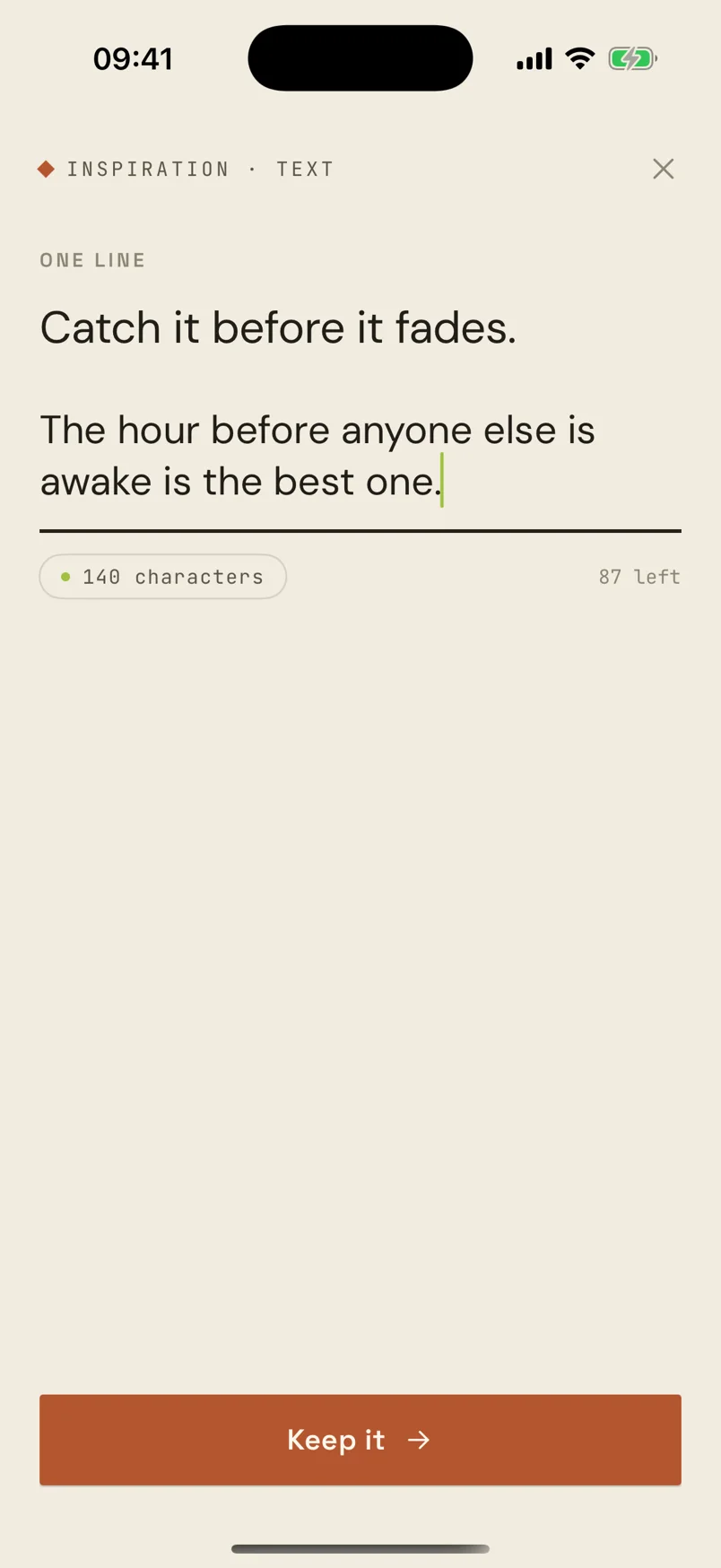
one frame · no filtersOne line
Finish the sentence. A hard character cap keeps you from overthinking it.
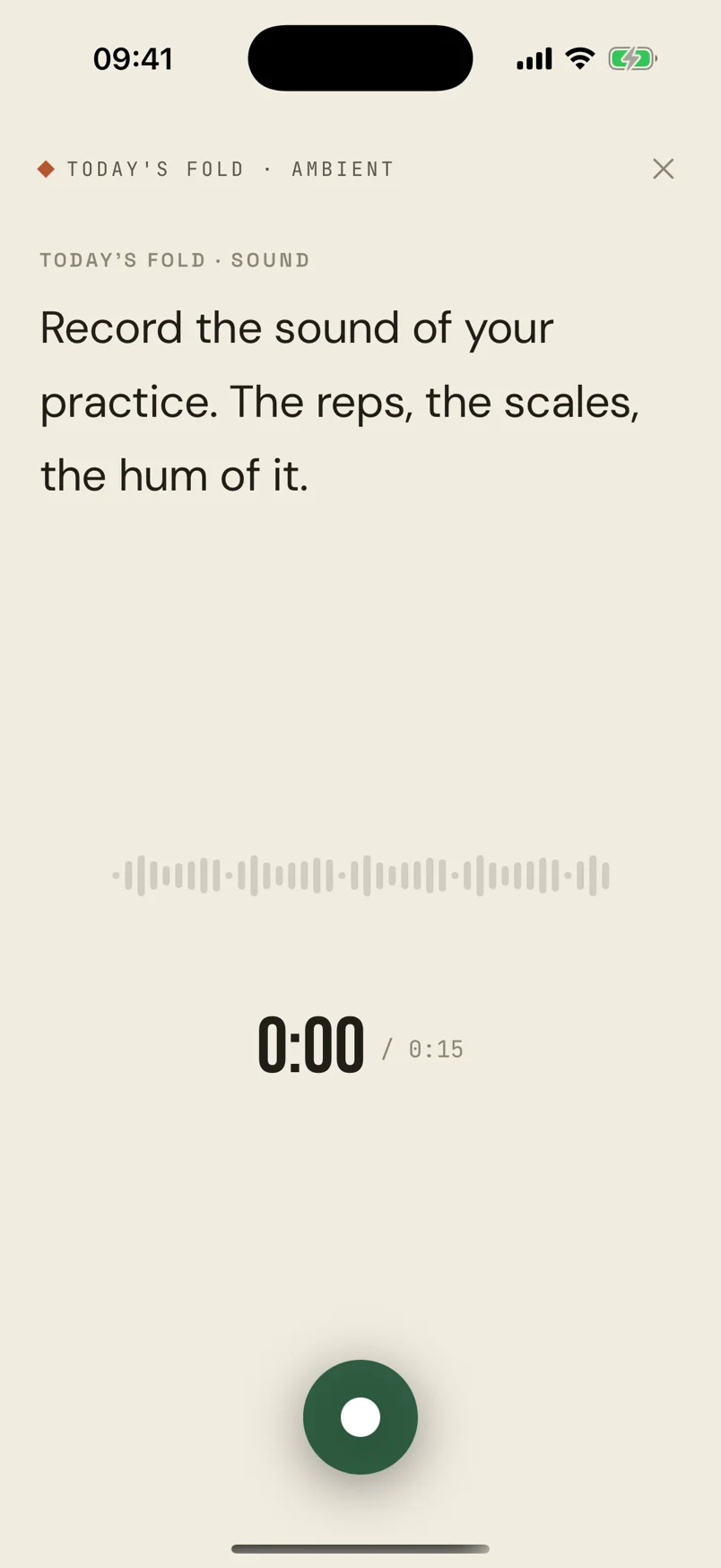
140 charactersAmbient
Fifteen seconds of wherever you are. The sound of a room is a better time capsule than a description of it.
15 seconds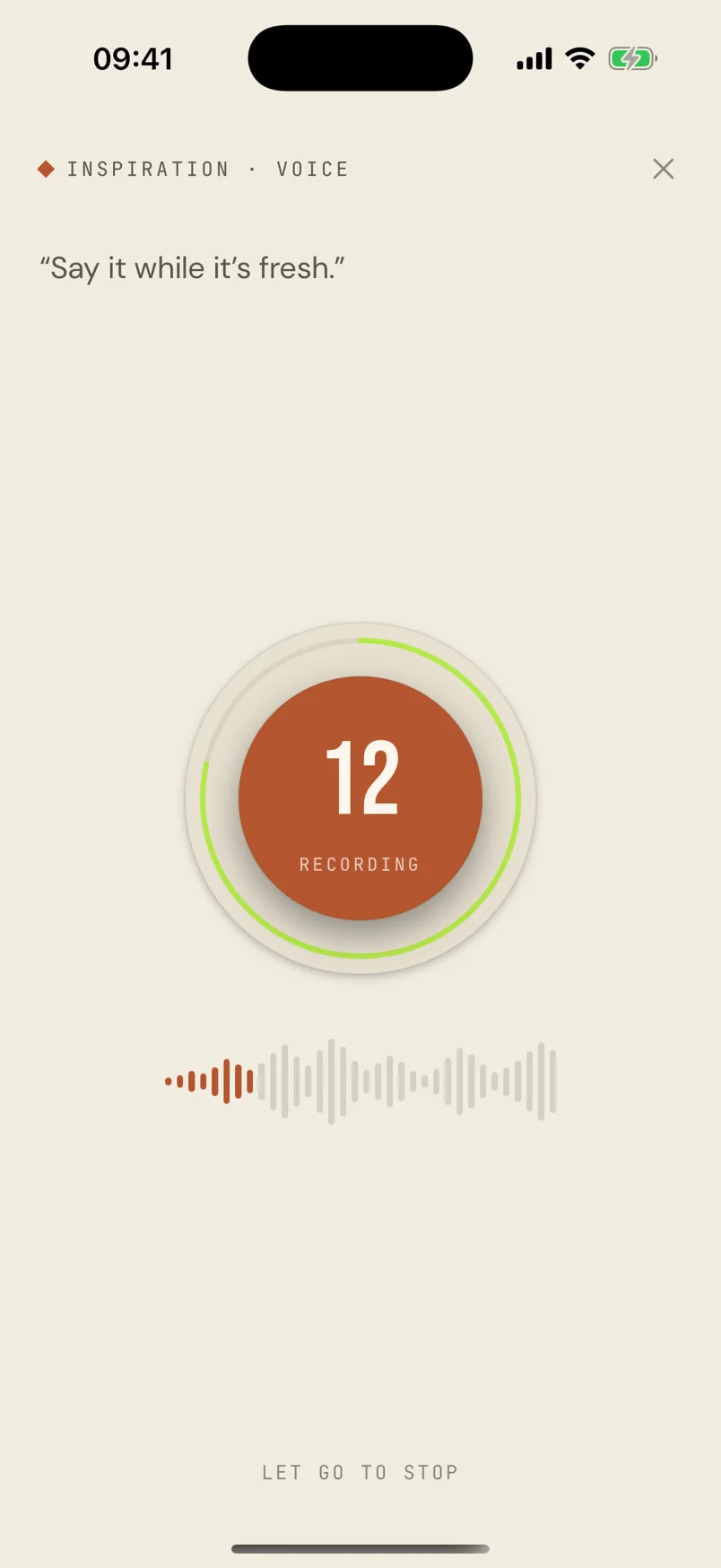
Senba keeps the receipts.
Belief does not come from being told you are great. It comes from your own track record. So the app spends most of its effort on giving that record back to you at the right moment.
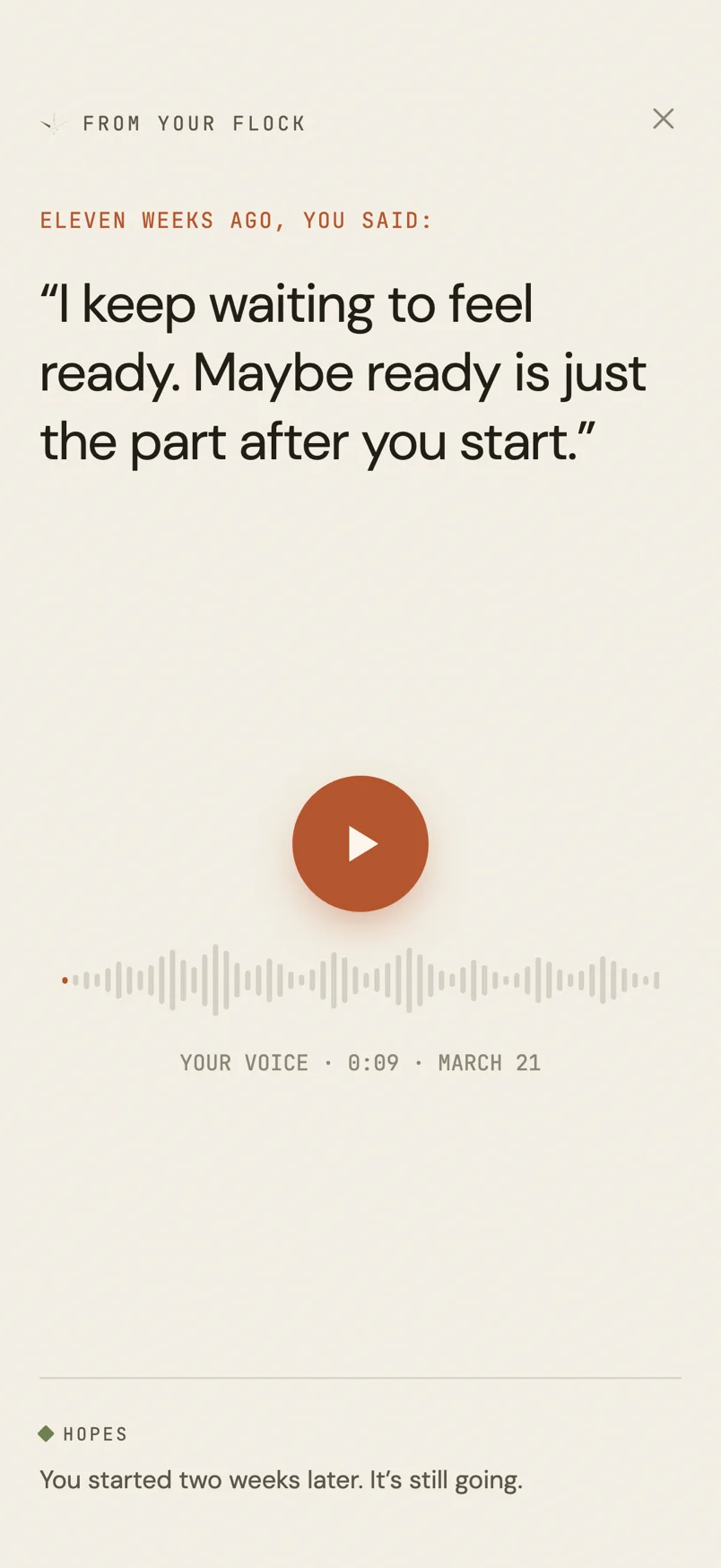
“Eleven weeks ago, you said this. Listen to it again.”
Sometimes it arrives as a voice note with a waveform. Sometimes as a slip of paper with a line you wrote. Sometimes as a photograph you took and forgot to look at again.
Cooldown, not shuffle
Once a fold has been surfaced it becomes ineligible for a while. True randomness over a small archive repeats constantly. This does not.
Weighted toward the old
Resurfacing yesterday is a status update. Resurfacing three months ago is an excavation. Senba biases toward the second one.
Same thread, different door
To show progress it does not repeat an old prompt. It plays the old artifact, then asks something new that pulls the same thread.
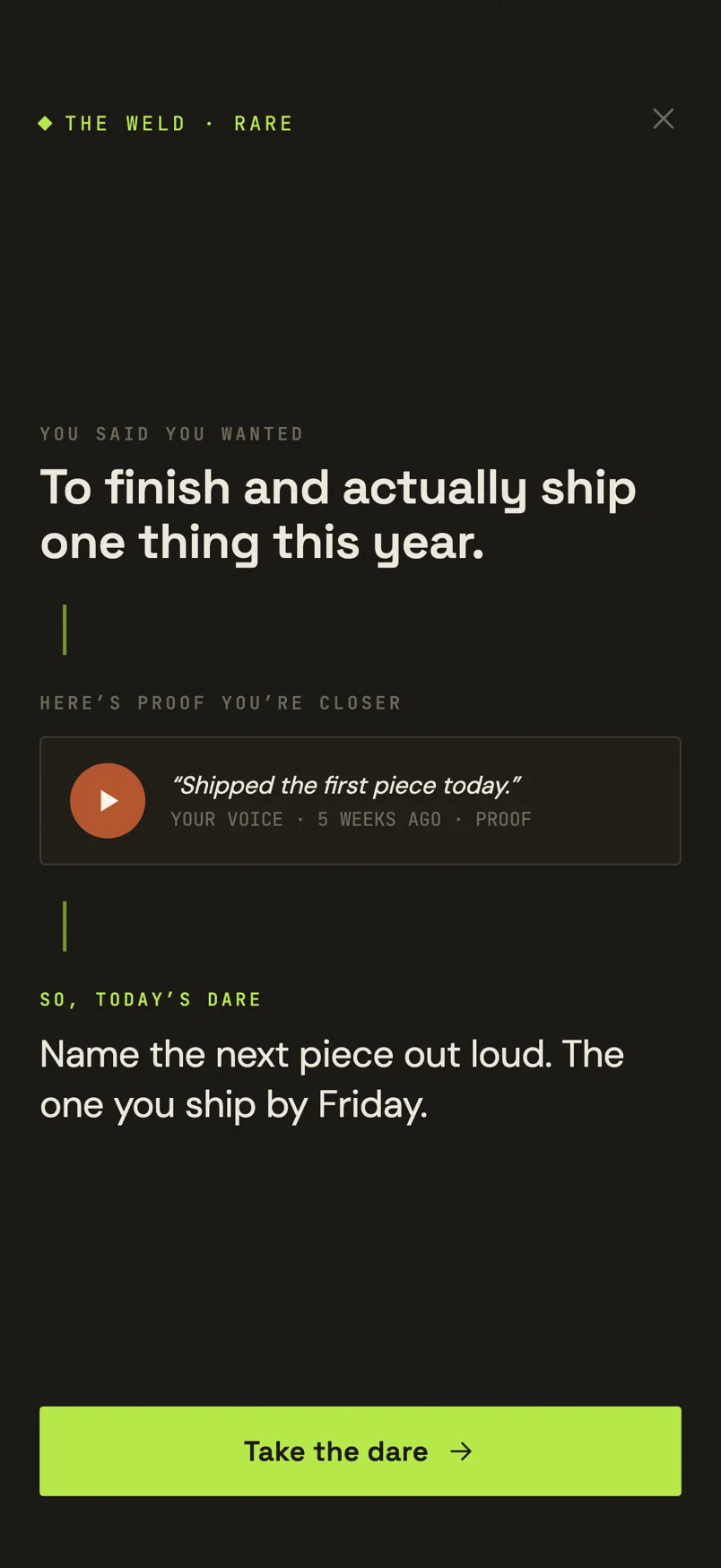
The weld · rare
Your own past, entered as evidence.
Now and then Senba finds a piece of your archive that is genuine proof you have moved toward something you said you wanted. It welds the two together and adds a dare for today.
This is the whole reason the app exists, so it is rationed. Roughly once a week, never on demand. If it happened daily it would stop landing.
The flock is the point.
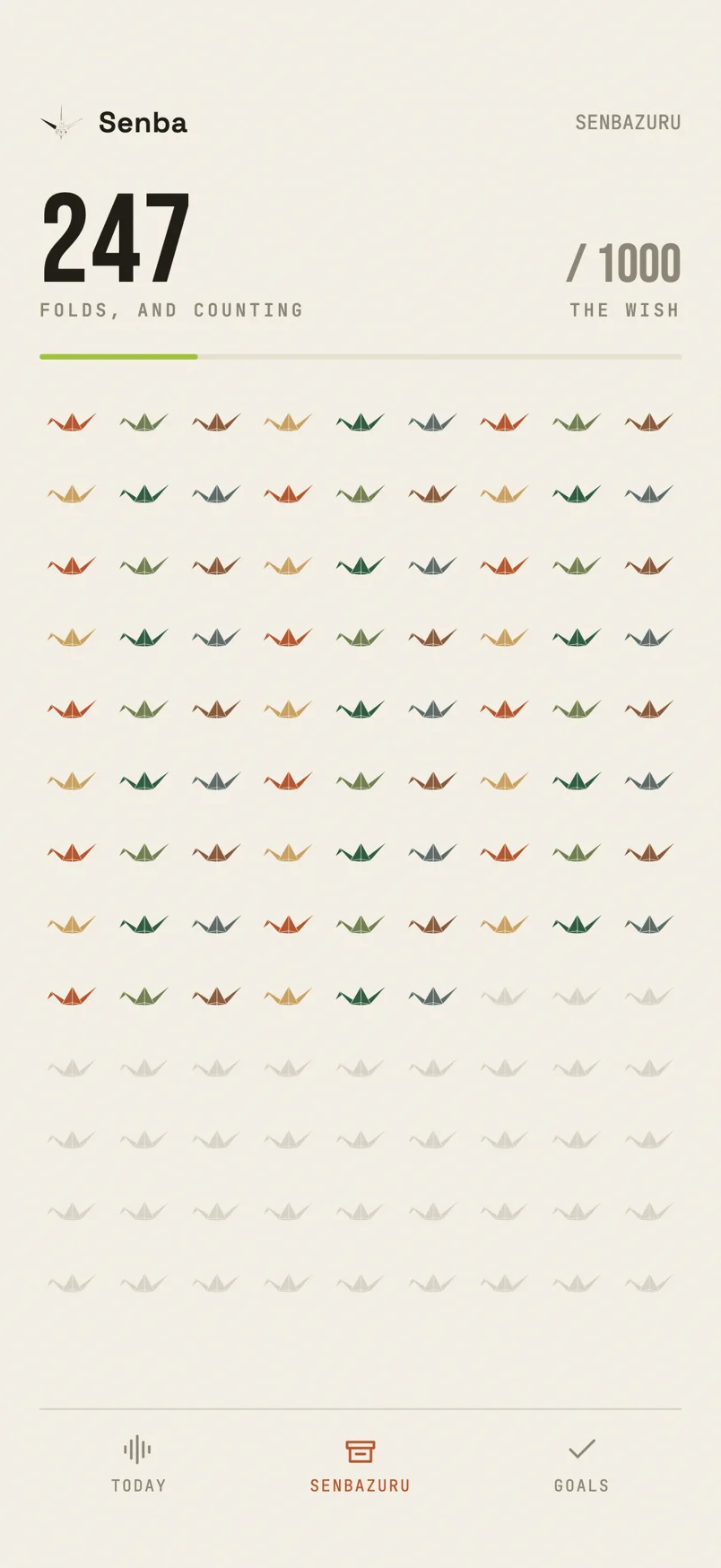
From senbazuru, the thousand folded paper cranes traditionally completed to carry a wish. Each capture is one crane. The archive is the flock. There is no streak to break and nothing to lose if you miss a day, only cranes you have already folded.
247 / 1000
Folds, and counting · the wish
Browse it as the flock, as a stream, as your sparks shelf, or as the wins you have already closed. Search it. Pin a piece to your Lock Screen. It is a record, not a leaderboard.
And when something strikes you between folds, catch it. Sparks land on their own shelf, outside the daily ritual, so an idea at 11pm does not have to wait for tomorrow's prompt.
On your device. Full stop.
Senba asks you for the most private material you have: your voice, your fears, the thing you actually want. That only works if none of it leaves your phone. So none of it does.
- No account, ever. No sign-up, no email, no password. Open the app and start.
- No servers of our own. There is nowhere for your folds to be uploaded to, because there is nothing to upload them to.
- Transcription runs on the phone. Voice notes are transcribed on-device so they can be searched and resurfaced. The audio is never sent anywhere.
- The intelligence is on-device too. Prompt wording and step suggestions use Apple's on-device model. Photos are described on-device. No cloud model reads your entries.
- iCloud sync is optional and it is yours. Turn it on and folds sync through your own private iCloud, which the developer has no access to. Leave it off and nothing ever leaves the device.
- No analytics, no tracking, no ads. No third-party SDKs of any kind. Nobody is counting your taps.